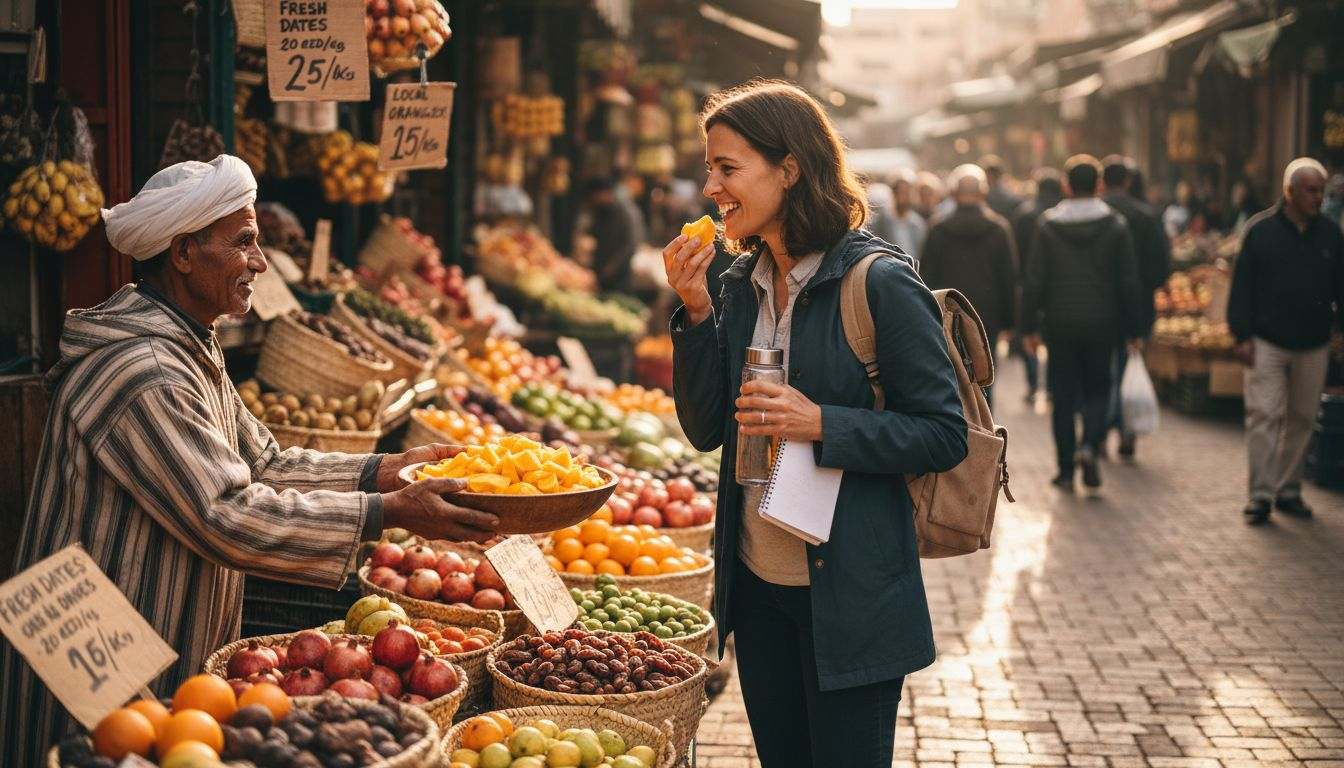
Planning a trip that goes beyond typical sightseeing can feel daunting for adventure-seeking couples, especially with the pressure of balancing cost and authenticity. Experiential travel gives you more than just snapshots by focusing on active participation within local cultures, from joining workshops in small-town Mexico to cooking with families in Italy. This approach creates true connections, deeper understanding, and memories that last, offering value far beyond a checklist of tourist spots.
Table of Contents
- Experiential Travel Defined And Common Myths
- Types Of Experiential Travel Worldwide
- How Experiential Trips Create Lasting Impact
- Risks, Pitfalls, And Avoiding Superficiality
- Planning Your Own Experiential Adventure
Key Takeaways
| Point | Details |
|---|---|
| Experiential Travel Focuses on Engagement | This travel style prioritizes active participation and meaningful connections with local cultures over passive sightseeing. |
| Address Common Misconceptions | Understand that experiential travel is accessible to individuals at all budget levels and does not require extreme adventure activities. |
| Choose Authentic Experiences | Select opportunities that offer genuine interaction with local communities, ensuring that you contribute positively and ethically. |
| Plan for Personal Growth | Set clear transformation goals for your journey, focusing on shared interests with your partner to enhance the experience. |
Experiential Travel Defined and Common Myths
Experiential travel isn’t just another buzzword in the tourism industry. It’s a deliberate shift toward travel that prioritizes active participation over passive consumption.
At its core, experiential travel emphasizes meaningful engagement with local culture, people, history, food, and environment. Unlike traditional sightseeing, where you observe from a distance, experiential travel pulls you into the action. You’re not just watching—you’re participating, learning, and transforming through direct involvement with communities and landscapes.
Active emotional participation distinguishes experiential tourism from standard vacation experiences. The difference lies in your level of engagement and intention.
What Makes It Different from Regular Tourism
Most vacations involve seeing attractions and checking boxes. Experiential travel goes deeper. You’re cooking traditional meals with locals, learning craft techniques from artisans, or contributing to community conservation projects. The focus shifts from consumption to authentic connection.
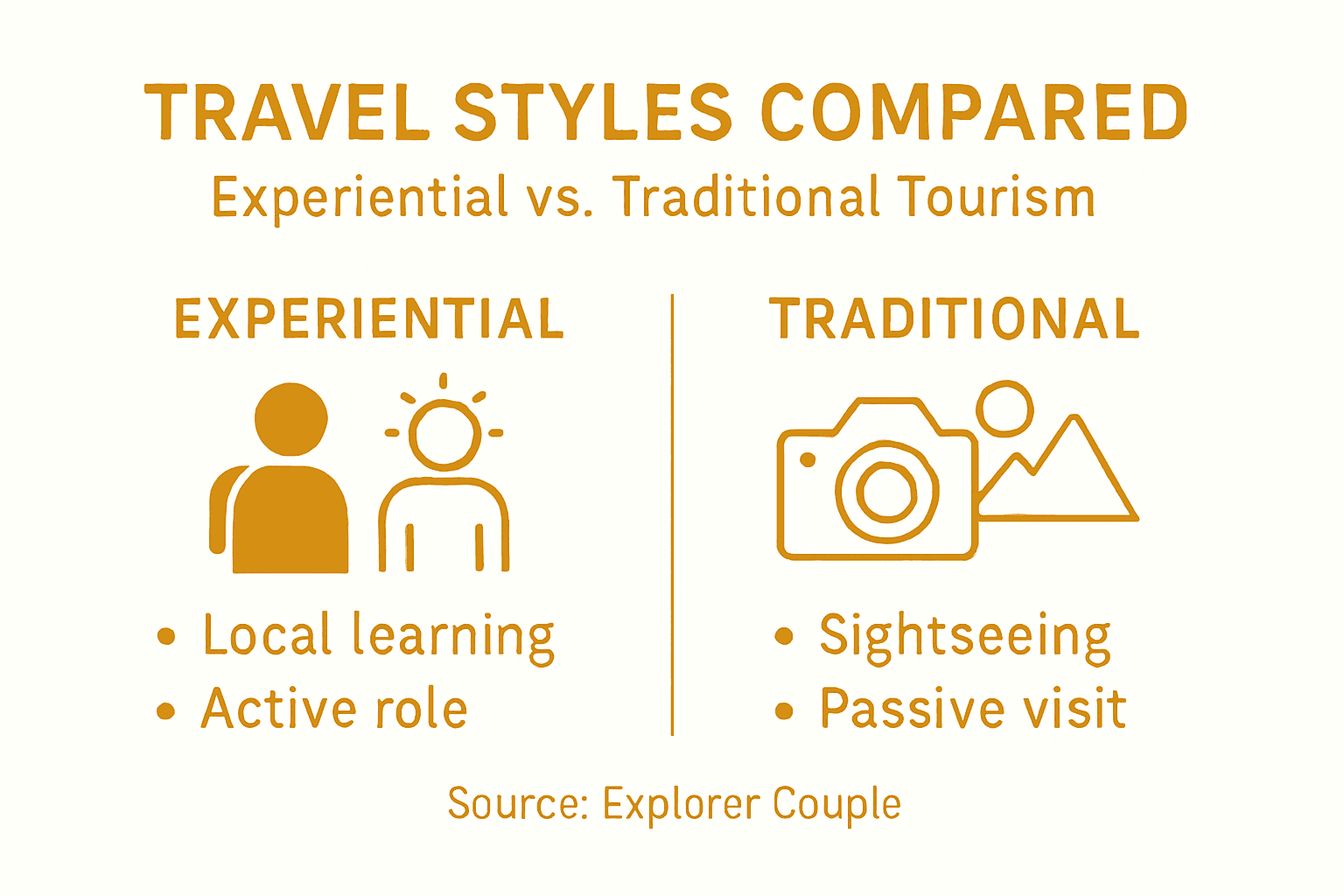
Consider the difference: A typical tourist visits a market and buys souvenirs. An experiential traveler learns the market’s history, practices haggling, and understands the vendors’ daily lives. One is about seeing; the other is about understanding.
Here’s how experiential travel compares to traditional tourism in key aspects:
| Aspect | Experiential Travel | Traditional Tourism |
|---|---|---|
| Engagement Level | Active participation with locals | Passive observation of attractions |
| Personal Impact | Promotes growth and deeper empathy | Provides leisure and relaxation |
| Community Benefit | Supports fair income and tradition | Often concentrated in large companies |
| Memory Creation | Fosters lasting relationships | Focuses on scenic highlights |
Common Myths That Miss the Mark
Several misconceptions cloud what experiential travel actually means. Here’s what people get wrong:
-
Myth 1: All travel is experiential — Just because you visited somewhere doesn’t mean you experienced it meaningfully. You could spend a week at a resort and remain disconnected from local culture entirely. True experiential travel requires intentional engagement.
-
Myth 2: It’s only for adventure seekers — You don’t need to skydive or trek through jungles. Experiential travel works across all interests: culinary enthusiasts, history buffs, artists, or anyone seeking genuine connection.
-
Myth 3: It’s expensive and time-consuming — Meaningful experiences happen at every budget level. A $10 cooking class beats a $100 guided tour in terms of authenticity and transformation.
-
Myth 4: You need special skills or knowledge — Beginners are welcome everywhere. Local guides and community members teach you what you need to know.
The gap between tourism and experiential travel is intention: Are you there to collect memories, or to genuinely understand a place and its people?
What You’re Actually Doing
Experiential travel for couples involves things like:
- Participating in cultural workshops or classes alongside locals
- Volunteering on community projects or conservation efforts
- Eating meals prepared by residents in their homes
- Learning traditional crafts directly from practitioners
- Having conversations that extend beyond surface-level pleasantries
Each activity builds genuine relationships rather than transactional interactions.
Pro tip: Before booking any experience, ask whether you’ll be actively participating or passively observing. The word “participate” should appear in the description—that’s your signal you’re getting authentic engagement.
Types of Experiential Travel Worldwide
Experiential travel takes different forms across the globe, shaped by local cultures, landscapes, and traditions. No single type fits every destination or traveler—that’s what makes this approach so versatile for couples with varied interests.
Diverse types of experiential tourism range from cultural immersion to nature-based adventures, reflecting how different regions offer unique ways to engage authentically. Understanding these categories helps you identify experiences that match your interests and travel style.
Main Categories You’ll Encounter
Cultural Immersion puts you directly into local life. You’re learning languages, celebrating festivals with residents, staying in family-run accommodations, or participating in daily rituals. This type builds deep connections with people and traditions.
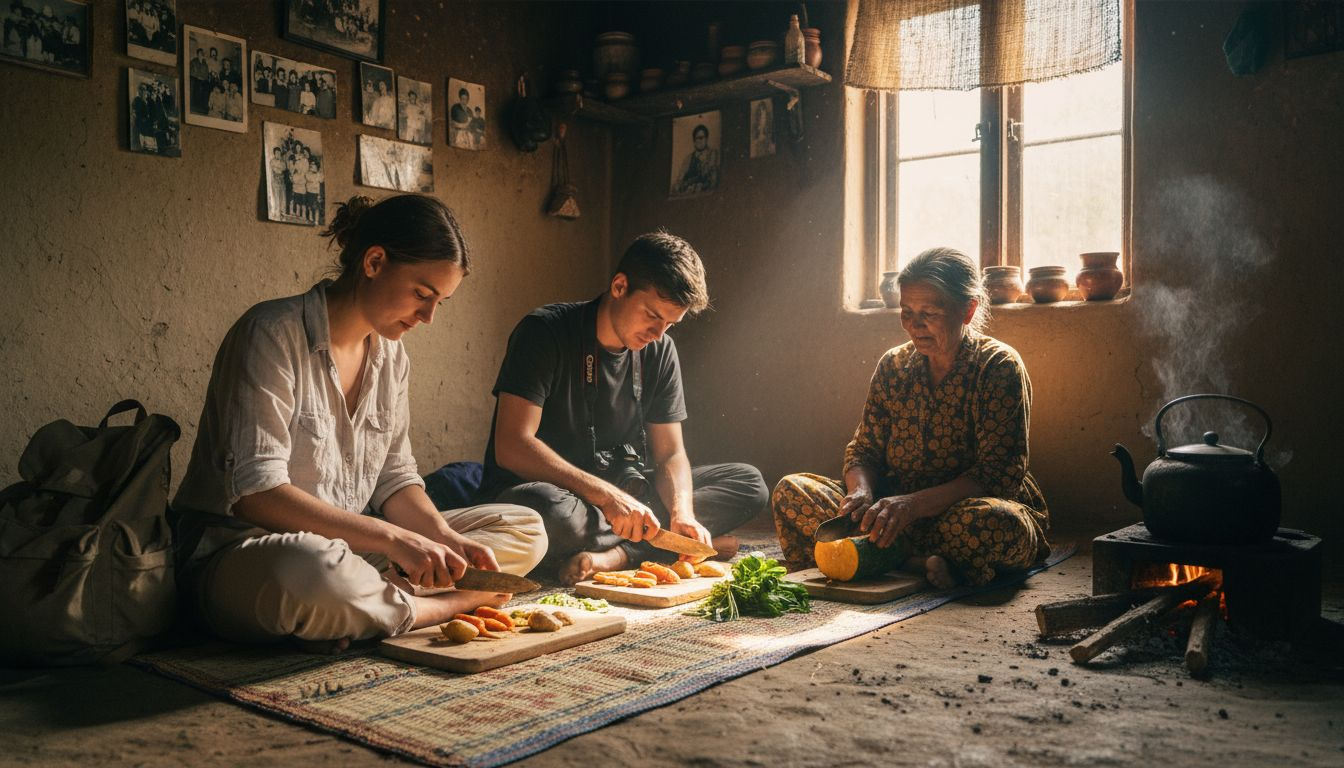
Culinary Tourism focuses on food as the gateway to culture. Cook traditional meals, visit farms where ingredients grow, attend market tours, or dine in home kitchens. Every dish tells a story about the region.
Nature-Based Experiences connect you with landscapes through active participation. This includes wildlife conservation projects, hiking with local guides, sustainable farming participation, or environmental restoration work.
Adventure Tourism combines physical challenge with cultural engagement. Think rock climbing with local instructors, water sports in traditional fishing communities, or trekking guided by indigenous peoples who share their knowledge.
Craft and Hobby Tourism teaches you traditional skills directly from practitioners. Learn pottery, weaving, woodcarving, jewelry-making, or other crafts alongside artisans in their workshops.
Below is a summary of major experiential travel categories and the typical activities each includes:
| Category | Typical Activities | Best For |
|---|---|---|
| Cultural Immersion | Sharing daily rituals, learning language | Seekers of authentic tradition |
| Culinary Tourism | Cooking, market tours with locals | Food lovers, curious eaters |
| Nature-Based | Conservation, guided hikes | Outdoor enthusiasts |
| Craft/Hobby | Artisan workshops, skill lessons | Hands-on learners and creators |
How They Work for Couples
Pairs often combine multiple types in a single trip. You might spend mornings learning to cook Vietnamese food, afternoons volunteering at a conservation project, and evenings attending cultural performances. Mix and match based on what excites you both.
Here’s what makes each valuable:
- Cultural immersion builds empathy and lasting friendships
- Culinary experiences create shared memories through taste
- Nature activities work for active couples seeking physical engagement
- Adventure travel appeals to thrill-seekers with cultural curiosity
- Craft learning produces tangible skills and souvenirs with meaning
The best experiential travel happens when you choose types aligned with your shared passions, not generic “must-do” lists.
Geographic Variations Matter
Rural destinations typically offer stronger cultural immersion. Indigenous communities often lead nature-based and adventure experiences. Urban centers excel at culinary tourism and craft workshops. Consider your destination’s strengths when planning.
North American couples often overlook experiential options in their own regions. Indigenous tourism, farm-to-table culinary experiences, and local craft workshops exist closer to home than you might think.
Pro tip: Choose one primary type for your trip and allow secondary experiences to emerge naturally—this prevents exhaustion and keeps the focus on genuine engagement rather than checking boxes.
How Experiential Trips Create Lasting Impact
Experiential travel doesn’t fade the moment you return home. The shifts in perspective, relationships, and values can ripple through your life for years afterward.
Unlike typical vacations that provide short-term enjoyment, transformative travel experiences trigger genuine personal growth and behavioral change. These transformations happen through meaningful interactions with people, cultures, and natural environments that challenge your assumptions and expand your worldview.
How the Impact Actually Works
Personal transformation begins during the experience itself. You learn a craft from an artisan, cook with a grandmother in her kitchen, or work alongside locals on a conservation project. These moments create emotional connections that stick with you.
After you return, the real impact unfolds. You find yourself making different choices—perhaps supporting fair-trade businesses, maintaining friendships with people you met, or advocating for environmental causes. The experience becomes part of your identity.
What Creates Lasting Change
Not every trip creates lasting impact. The depth of change depends on several factors:
- Motivation — Why you travel matters. Seeking genuine connection produces deeper impact than collecting Instagram photos.
- Social context — Shared experiences with your partner amplify the effect. You both process and discuss what you learned.
- Prior openness — Coming with curiosity rather than judgment shapes what you absorb and retain.
- Depth of engagement — Spending one afternoon learning pottery differs vastly from apprenticing for a week.
- Reflection afterward — Journaling, discussing, or creating art about your experiences cements the lessons.
Meaningful value and affective connections across tourists and host communities determine whether impact lasts or fades after you unpack your bags.
Benefits Beyond the Individual
Your impact extends beyond personal growth. When you travel experientially, you create positive effects for host communities, cultural preservation, and environmental conservation.
Local guides and artisans benefit from fair-wage work that values their knowledge. Communities see incentive to maintain traditions rather than abandon them. Ecosystems receive funding and conservation support through your participation in nature-based experiences.
This isn’t abstract feel-good talk—it’s tangible economic and cultural benefit that compounds when multiple experiential travelers make the same choices.
The Partner Effect
Couples who travel experientially together deepen their relationship. Shared challenges, learning new skills together, and navigating unfamiliar cultural contexts build stronger bonds.
You return home as a team with shared stories, inside jokes, and mutual friends in other countries. That’s powerful glue.
Pro tip: Document your experience through journaling or photos during the trip, then revisit these within the first month home—this deliberate reflection strengthens memory formation and helps you integrate lessons into daily life.
Risks, Pitfalls, and Avoiding Superficiality
Not all travel labeled as “experiential” actually delivers meaningful engagement. The tourism industry has learned to package experiences as marketing buzzwords, creating something that looks experiential but lacks genuine substance.
This is where the danger lies. You can spend money on carefully curated activities that feel authentic but are actually staged performances designed for profit, not connection. Superficial engagement and commercialization undermine the entire point of experiential travel and leave you with hollow memories instead of lasting transformation.
The Superficiality Trap
Staged authenticity is the biggest culprit. Imagine a “traditional cooking class” where everything is pre-prepared and you’re essentially following a script for tourists. The experience feels authentic, but the community isn’t truly sharing their daily reality—they’re performing it.
Commercial tour operators have become expert at creating Instagram-worthy moments rather than meaningful interactions. You get photos that look great but memories that ring false.
Warning Signs to Watch For
Before booking any experience, evaluate whether it avoids these red flags:
- Overly polished presentations — Real cultural practices aren’t always photogenic or convenient for tourists.
- Minimal interaction with locals — If guides do most of the talking, you’re not truly engaging.
- Rushed scheduling — Deep experiences require time. A one-hour “cultural immersion” is rarely genuine.
- No transparency about pricing — When you can’t see how much locals earn, it’s likely exploitative.
- Tourist-only groups — Authentic experiences mix visitors with local participants.
- Experience marketed as “exotic” or “primitive” — Language like this signals problematic, superficial framing.
Commodification risks undermine authentic human connections and prevent the personal growth that defines real experiential travel.
How to Find Genuine Experiences
Seek experiences designed for perspective-shifting, not entertainment. Look for programs that challenge you, introduce discomfort, and require real participation rather than passive observation.
Verify that local people benefit fairly. Research operator ethics, read reviews from previous travelers who speak to authenticity, and ask direct questions about how money is distributed. Legitimate operators are transparent about this.
Choose smaller groups over large tours. Longer engagements over quick visits. Independent operators over massive commercial enterprises. These patterns signal genuine commitment to meaningful exchange.
Pro tip: Ask potential experience providers: “Will I interact directly with community members, and what percentage of fees go to them?” Their answers reveal whether the experience prioritizes profit or authentic connection.
Planning Your Own Experiential Adventure
Planning experiential travel requires a different mindset than booking a typical vacation. You’re not just choosing a destination and hotel—you’re designing an experience that transforms you.
Start by asking yourself what you actually want to learn or understand. Do you want to master a craft? Deepen your connection to nature? Build relationships with people from another culture? Your answer shapes everything that follows.
Define Your Transformation Goals
Personal goals drive experience selection. Are you seeking culinary knowledge, environmental understanding, artistic skill, or spiritual growth? Be specific about what meaningful engagement looks like for you as a couple.
Discuss with your partner what you both want from the trip. Do your goals align? A couple where one wants adventure and the other wants cultural immersion can design a journey that satisfies both if you communicate clearly.
Research Authentic Opportunities
Active cultural immersion and meaningful participation require intentional selection of activities and destinations. Avoid generic tour companies and search for smaller operators, community-based organizations, or direct connections with local practitioners.
Read reviews from previous travelers. Look for specific mentions of authentic interactions, fair pricing, and real skill development. Generic praise like “amazing experience” tells you nothing. Specific details—“we spent four hours learning to weave with a woman who taught us her grandmother’s patterns”—signal genuine engagement.
Planning Framework
Use this structure to organize your adventure:
- Choose your destination based on available experiences matching your goals
- Research operators and guides with verified ethical practices
- Book longer engagements over quick activities when possible
- Build in flexibility for spontaneous local connections
- Prepare mentally by studying basic customs and language
- Plan post-trip integration through journaling or creative projects
Sustainability Matters
Ethical impact should influence every booking decision. Verify that local communities benefit fairly, that cultural practices aren’t exploited, and that environmental damage is minimized.
Ask direct questions: How much do locals earn? Are there environmental protections? Is participation voluntary, or are people coerced into performances? Legitimate operators answer transparently.
Applying standards that emphasize respect for local culture and environment separates genuine experiential travel from exploitative tourism.
Prepare for Challenge
Real experiences include discomfort. You might feel awkward learning a new skill, embarrassed speaking a language poorly, or emotionally vulnerable in unfamiliar situations. This is where growth happens.
Discuss with your partner beforehand that some moments might feel uncomfortable. Having that conversation prevents misunderstandings when things don’t feel like a vacation.
Pro tip: Create a shared planning document with your partner listing potential destinations, activities, and operators—then rate them on authenticity, ethics, and alignment with your goals before committing funds.
Unlock Authentic Experiential Travel with Expert Guidance
Experiential travel offers a chance to move beyond typical sightseeing and truly engage with cultures, cuisines, and communities. Yet, finding genuine opportunities that promote active participation and avoid superficial experiences can feel overwhelming. You want to ensure your journey delivers real personal growth, meaningful connections, and lasting impact—not just staged performances or tourist traps.
Discover how Explorer Couple can help you plan immersive adventures that match your goals. Our detailed travel guides and expert tips focus on uncovering hidden gems and community-led experiences worldwide. With a strong emphasis on purposeful travel and authentic cultural immersion, we provide resources to build trips that foster empathy, shared memories, and respectful engagement. Don’t settle for surface-level visits. Find inspiration, learn how to identify true experiential opportunities, and design your transformative journey today at Explorer Couple.
Frequently Asked Questions
What is experiential travel?
Experiential travel focuses on active participation in local culture, history, and environment, promoting meaningful engagement rather than passive observation.
How does experiential travel differ from traditional tourism?
Unlike traditional tourism that often emphasizes sightseeing and consumption, experiential travel promotes authentic connections by involving travelers in local activities, crafts, or community projects.
Can anyone participate in experiential travel, or is it only for adventure seekers?
Experiential travel is for everyone, regardless of interest or fitness level. It includes various activities like culinary experiences, cultural workshops, or craft learning, suitable for all travelers.
How can I ensure that my experiential travel experiences are authentic?
Look for experiences with minimal superficial engagement, prioritize local-run activities, research reviews from past travelers, and ask direct questions about interactions and community benefits.